Questions people ask about Grove
How do I run several Claude Code sessions at once without them colliding?
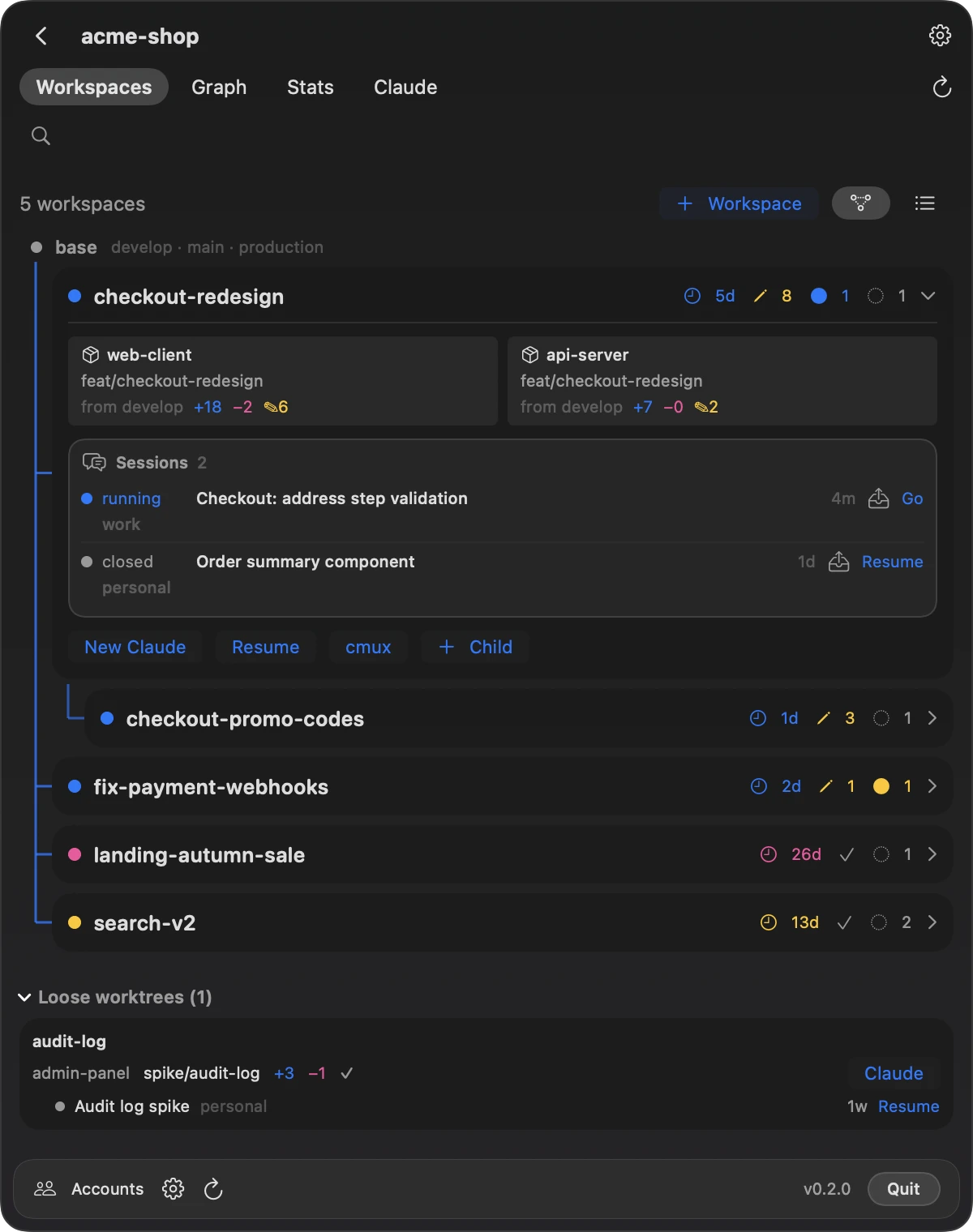
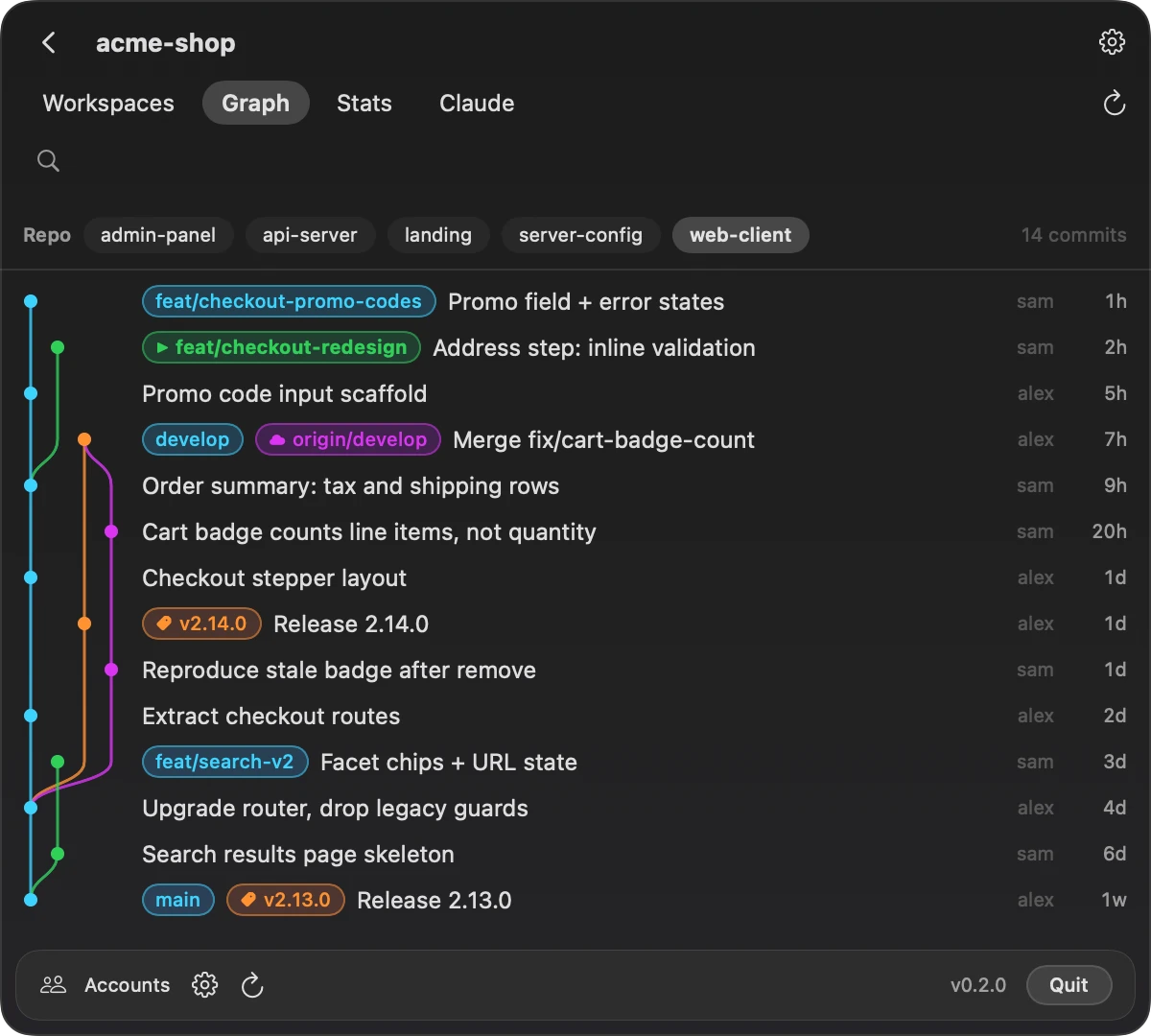
Give each task its own working copy, a git worktree; Anthropic documents this for parallel sessions. For a product split across repositories, a Grove workspace holds a worktree of each repository on one branch. Start Claude Code in that directory.
Can Claude Code work on multiple repositories at once?
--add-dir gives a session access to more directories, and permissions.additionalDirectories makes that persistent. It grants file access, and Claude Code doesn’t pick up most .claude/ configuration from those directories. A Grove workspace puts every repository, already on the feature’s branch, under the directory Claude Code starts in. Guide: Run Claude Code across multiple repositories.
How is a Grove workspace different from claude --worktree?
See the table above. In short, --worktree covers one repository, and a workspace covers every repository you pick, on one branch.
Can I choose the base branch, branch name and folder for each workspace?
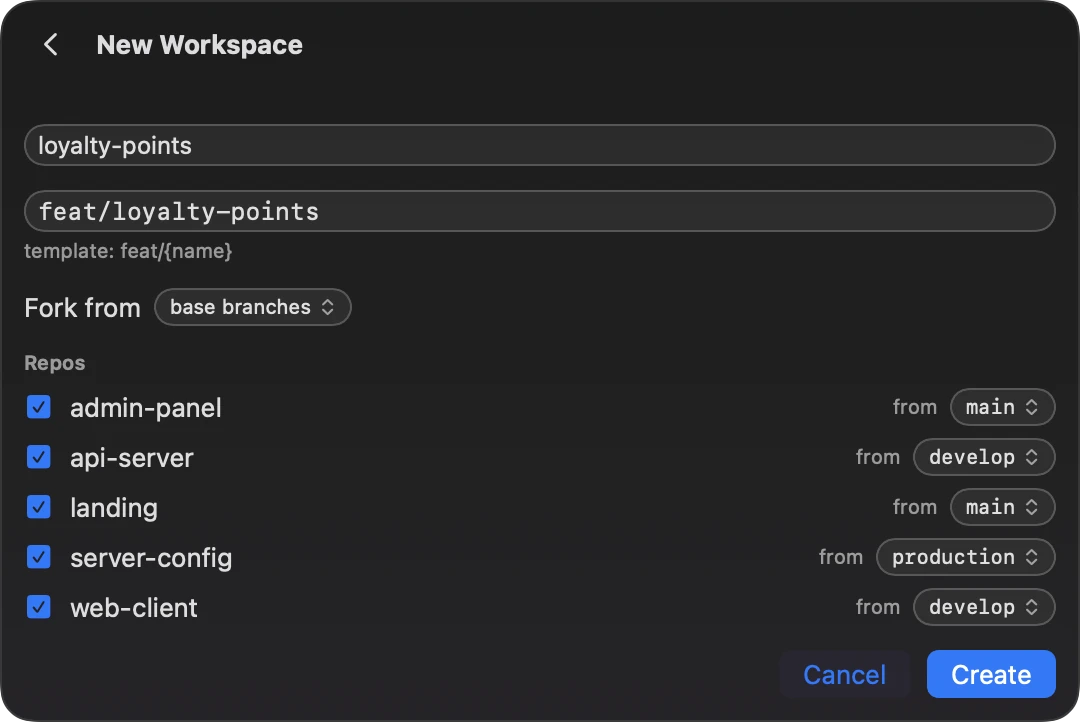
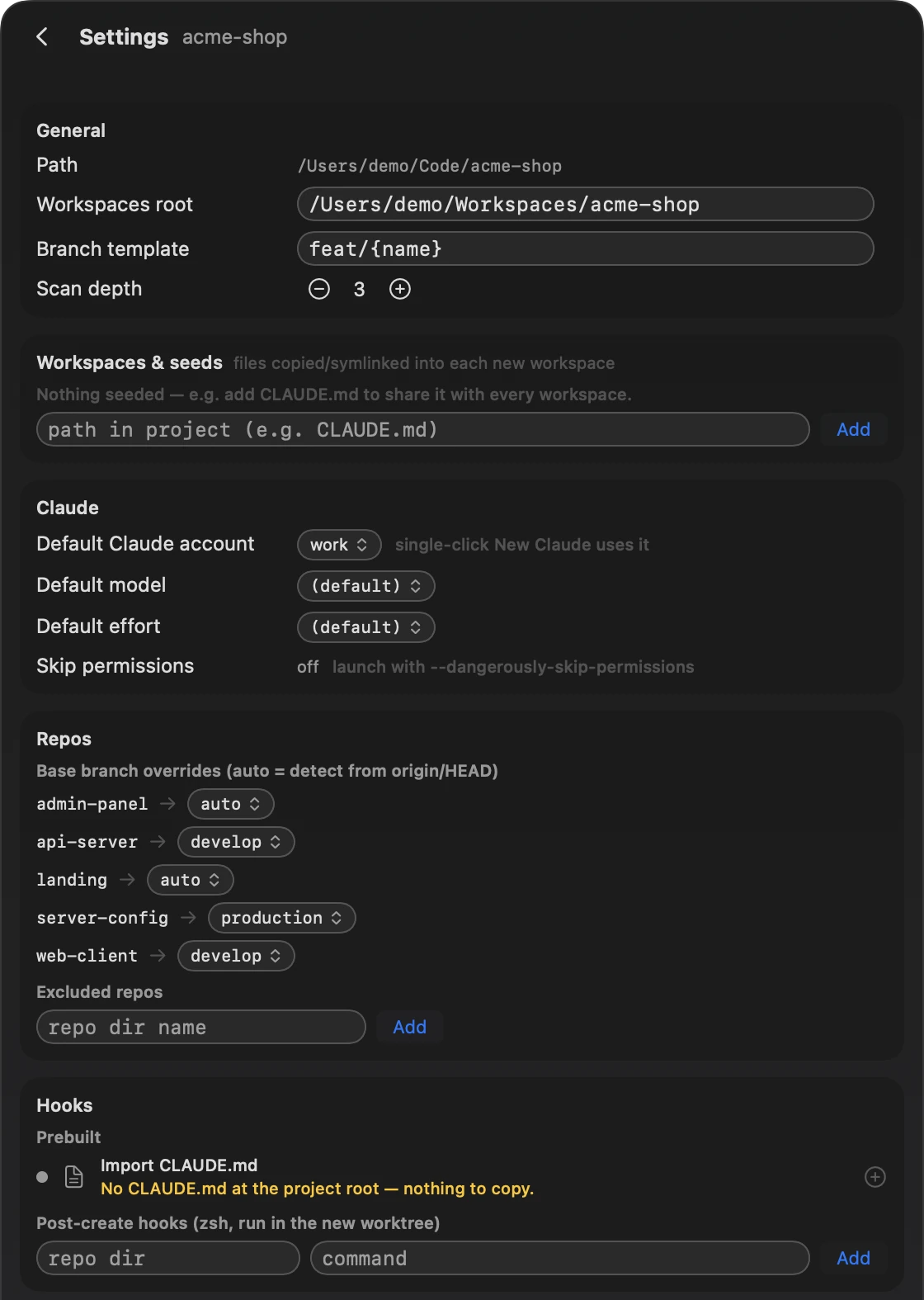
Yes. Each repository has its own base branch, branch names come from a template, and the workspace root is set by a template.
How do CLAUDE.md and other shared files get into each workspace?
List them as seed files in the project’s settings. Grove links or copies each one into every new workspace, at its root or into each repository.
How do I continue a Claude Code session under another account?
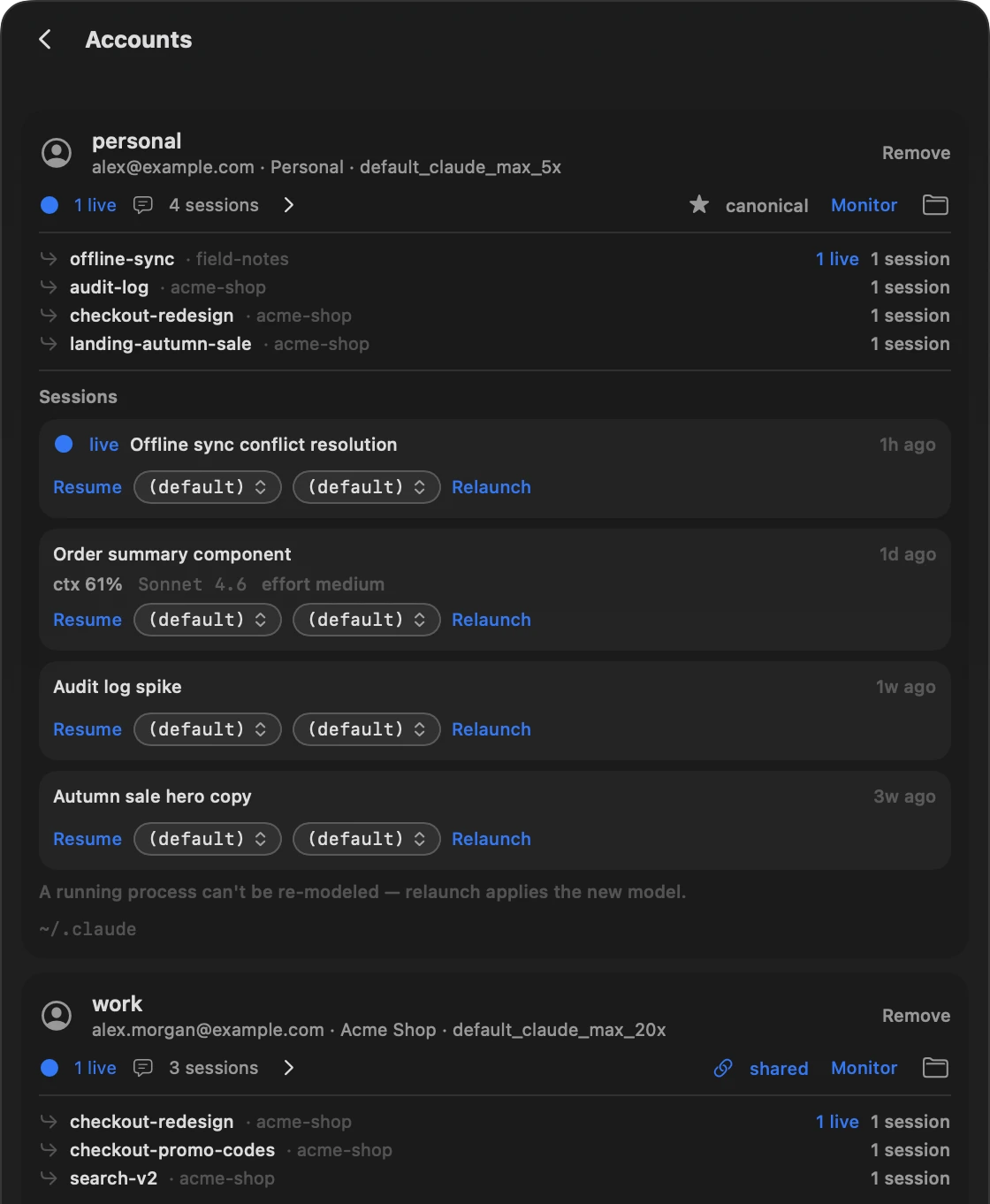
- Resume as… continues it under another account without copying anything.
- Migrate to… makes a full copy.
- Share moves it into the shared store.
Grove refuses a move that would give a session two writers. Guide: Continue a Claude Code session on another account.
Will I lose session history when I switch accounts?
Linked accounts share their session folders through ~/.claude, so a session started under one linked account is visible to the others. Credentials, settings and plugins stay with each account.
Why do old Claude Code sessions disappear, and can I keep them?
Claude Code deletes transcripts older than cleanupPeriodDays, 30 days by default. Grove’s transcript mirror keeps them for up to 90 days and 500 MB by default, and you can turn it off.
How many Claude Code sessions can I run at once?
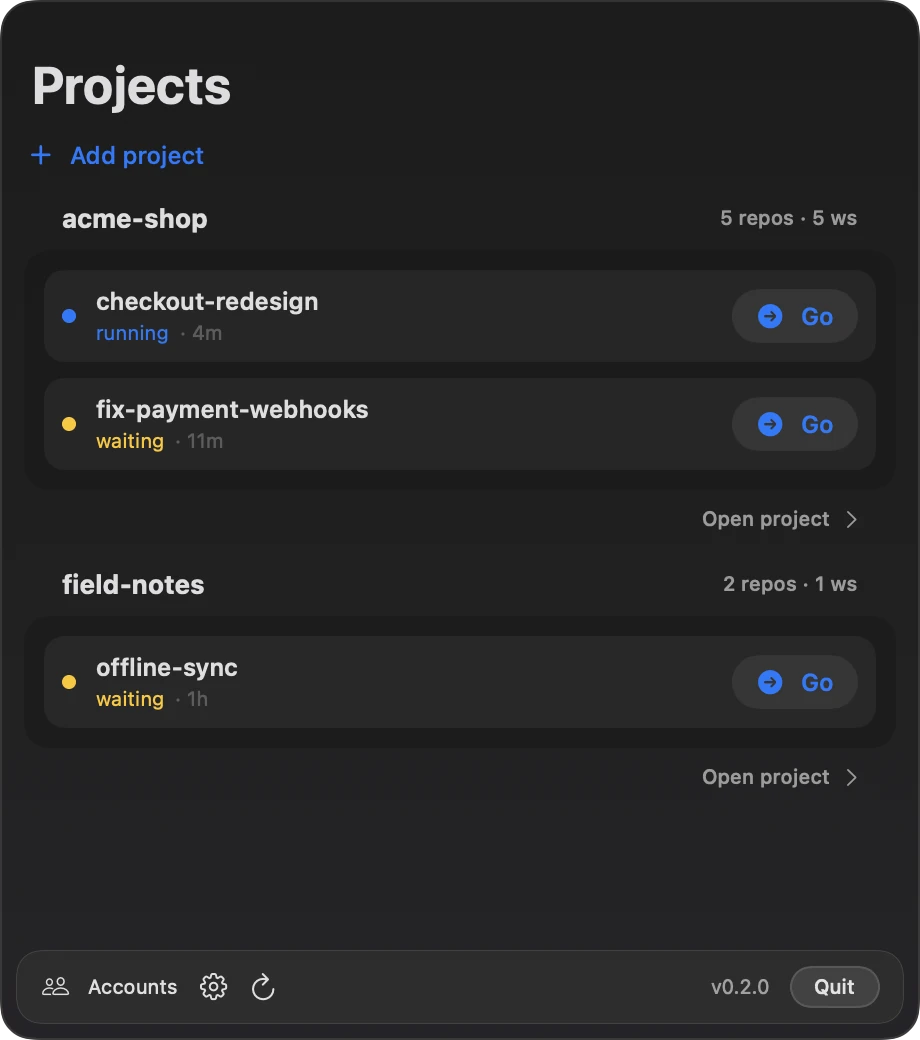
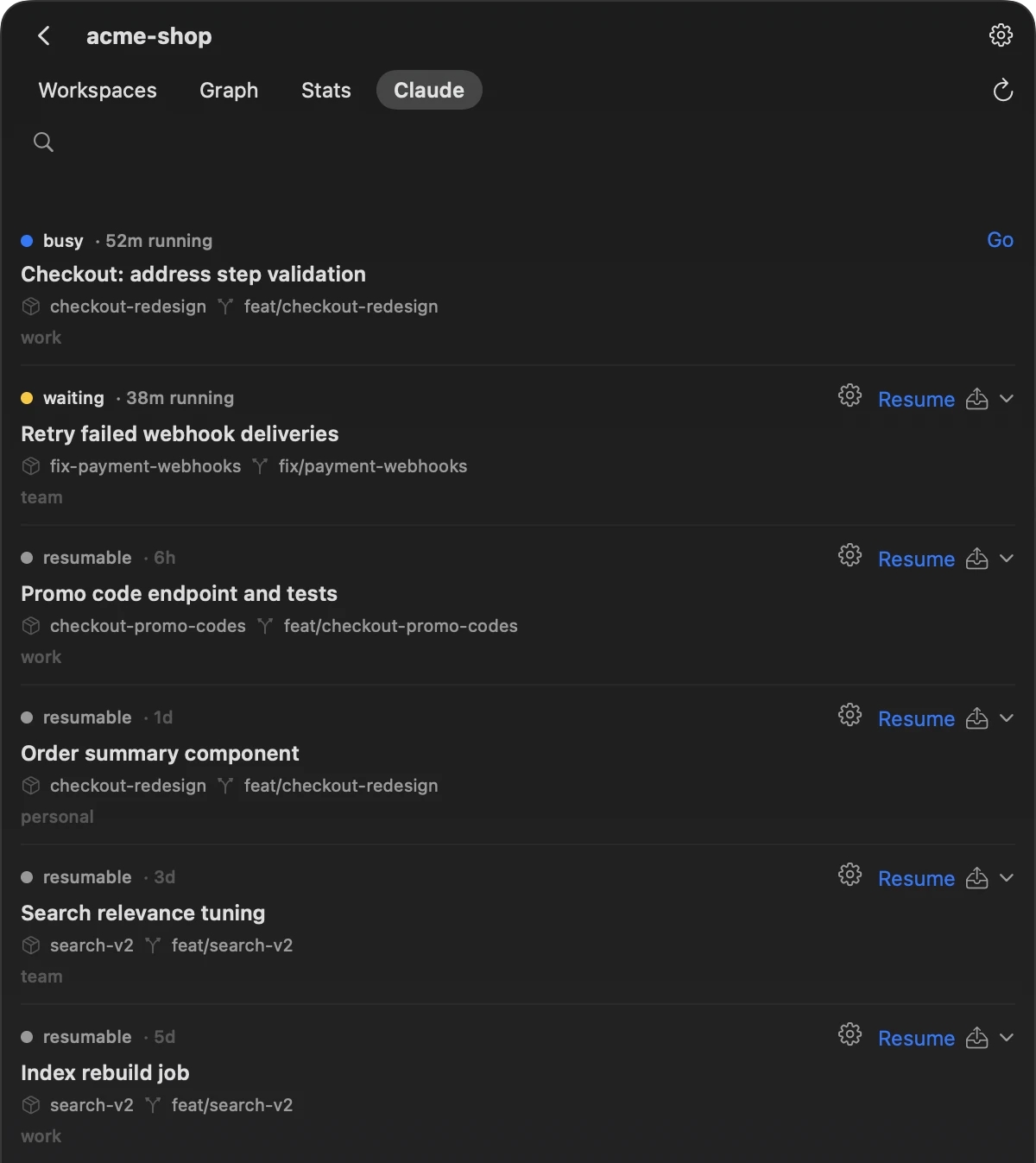
Grove sets no limit of its own. Every session counts toward the usage limits of the account it runs under. Grove lists the sessions by project and workspace and shows which are running and which are waiting for you.
Do I need cmux?
It’s recommended, not required. The launch sheet can open a session in Terminal.app; the other buttons that start or resume a session, such as Resume and Resume as…, open it in cmux. You can also start Claude Code in a workspace yourself, from any terminal.
Does Grove work with Codex or other agents?
A workspace is an ordinary directory, so you can start any CLI agent in it yourself. Grove starts, lists and moves Claude Code sessions only.
Can I resume a session from another directory?
Yes. Grove lists the sessions of every project and resumes each one with claude --resume in the session’s own directory.
Why does macOS block the first launch?
Grove is signed ad hoc and not notarized by Apple. Use Open Anyway in System Settings → Privacy & Security once; First launch has the steps.
Which Macs does Grove run on?
Macs with Apple silicon, on macOS 26 or later.
Is Grove free and open source?
Yes, under the GNU GPL v3. Version 0.2.0 and earlier were released under the MIT License.